Years ago while researching my hobby I came across this article, From A to Z Series - Malaysia by Bob Reis a coin dealer based in Raleigh, North Carolina, USA. What really got my attention was how he started his article - Numismatically speaking, this (Malay Peninsula, now Malaysia) is perhaps the most mysterious country on earth...
I bought a Cocos Island coupon from Bob a few years ago that I subsequently traded away. I have not told him about linking to his article yet but you can read about what he wrote here.

Showing posts with label Malay Peninsula. Show all posts
Showing posts with label Malay Peninsula. Show all posts
Sunday, June 13, 2010


Saturday, June 12, 2010
DISCOVERY - HOARD OF MALAY STATES COINS FOUND AT TANJUNG PINANG, RIAU ISLAND, INDONESIA (PART 1)
Old coins and relics are known to have been found over the years in the Malay Peninsula (Malaysia) and Malay Archipelago (in this case Indonesia and southern Thailand) but not many involve discovery of a large quantity of items and not many are reported or made known to general public. Perhaps one of the most known discovery was the one at Tanjung Pinang around middle of 1980's.
Mohd. Kassim in his article in Saga Pertubuhan Numismatik Malaysia, 21 Anniversary 1968 - 1989, published in 1990 by Malaysia Numismatik Society shared his experience in having a first look at the items from the famous discovery that he described as a "numismatist's dream come true".
The findings according to Kassim fills a significant gap in the numismatic history of the Malay Peninsula. A new light was shed on how earlier coins were cast by the "lost wax" method, how coins were produced and how the technology developed.
The items found include:

According to Kassim many of the items found ready market in Singapore. Perhaps certain items were acquired by Muzium Negara, Kuala Lumpur Malaysia such as the above item in block image but most items are "lost" or tucked away in private collections. Approximately 25 years after their discoveries the fate of these fascinating items are not known.
Images of some of the items found at Tanjung Pinang, Riau, Indonesia will be included in a future post soon.
Mohd. Kassim in his article in Saga Pertubuhan Numismatik Malaysia, 21 Anniversary 1968 - 1989, published in 1990 by Malaysia Numismatik Society shared his experience in having a first look at the items from the famous discovery that he described as a "numismatist's dream come true".
The findings according to Kassim fills a significant gap in the numismatic history of the Malay Peninsula. A new light was shed on how earlier coins were cast by the "lost wax" method, how coins were produced and how the technology developed.
The items found include:
- cockerel perched on ring (that Kassim attributed to 17th. century Kedah)
- varieties of animal currencies - roosters, fish, goats (sheep) and tortoises (that Kassim mentioned was used in Selangor and Perak)
- tampangs
- tin coins used in Palembang, Djambi and Kedah
- moulds of making "VOC" copper currency

According to Kassim many of the items found ready market in Singapore. Perhaps certain items were acquired by Muzium Negara, Kuala Lumpur Malaysia such as the above item in block image but most items are "lost" or tucked away in private collections. Approximately 25 years after their discoveries the fate of these fascinating items are not known.
Images of some of the items found at Tanjung Pinang, Riau, Indonesia will be included in a future post soon.
Thursday, May 27, 2010
TIN AND THE MALAY PENINSULA - PART II OF II
The trading of goods in the early days was based on exchange of goods but subsequently as the local currencies of the respective traders became accepted as trading currencies of these trading centers, these currencies became a trading medium. Over time, local currencies were issued by the early governments. Being a region rich in gold and tin, it was only natural that these metals were used for the currency. Tin that was found in abundance in the Malay Peninsula and Archipelago advanced from goods to trade for to also being used as a trading medium and currency in the form of ingots (blocks or bars), animal ingots and animal figures and conventional coins.
These ingots that were used in the form of lump (block or bar) ingots initially, later evolved into the forms of animals and even insects. Various types of tin blocks were produced; mound-shaped, cone decorated with serrated edges, conical or cylindrical or cylindrical-shaped, mountain or shrine-shaped and sugar loaf-shaped, pyramid or pagoda-shaped and pyramid-shaped with mangosteen rosette pattern [Source: Bank Negara Malaysia, 2005. Malaysia Numismatic Heritage, Corporate Services Department, Bank Negara Malaysia].
The appearance of animal and insect like ingots is also said to have its roots in the tin mining practices and rituals of the tin miners. Intertwined by its purpose in tin mining activities and use as a currency, the reason(s) for the creation of tin animal ingots became a mystery and will remain as one without more records or evidence of their actual use and purpose. The general theory is that these animal and insect like ingots were first made to serve their magical purpose in tin mining and later somehow became accepted as a trading medium.
These ingots that were used in the form of lump (block or bar) ingots initially, later evolved into the forms of animals and even insects. Various types of tin blocks were produced; mound-shaped, cone decorated with serrated edges, conical or cylindrical or cylindrical-shaped, mountain or shrine-shaped and sugar loaf-shaped, pyramid or pagoda-shaped and pyramid-shaped with mangosteen rosette pattern [Source: Bank Negara Malaysia, 2005. Malaysia Numismatic Heritage, Corporate Services Department, Bank Negara Malaysia].
The appearance of animal and insect like ingots is also said to have its roots in the tin mining practices and rituals of the tin miners. Intertwined by its purpose in tin mining activities and use as a currency, the reason(s) for the creation of tin animal ingots became a mystery and will remain as one without more records or evidence of their actual use and purpose. The general theory is that these animal and insect like ingots were first made to serve their magical purpose in tin mining and later somehow became accepted as a trading medium.
Tuesday, May 25, 2010
TIN INGOTS & ANIMAL MONEY - BASIC BACKGROUND INFORMATION
This web page by Bank Negara Malaysia, Money Museum provides good basic background information on tin ingots and animal money.
Here you have some information on how early tin ingots became part of trading activities, their origin, extensiveness of use and their exchange value. Information on animal money touches on the centuries long tin mining activities of the old Malay Peninsula, the minting of tin ingots in animal shapes, their possibles uses and the magical aspects of the animal shaped ingots.
It is important to keep in mind that tin ingots in various shapes were used for centuries. Information such as the recorded exchange value of certain tin ingots represent value that holds true only for that particular point in time. With not much recorded information available, the association of the animal shaped ingots with magic spins mystery out of them.
Useful background information on Tin Animal Money and Tin Ingots can also be found at Wikipedia.
Here you have some information on how early tin ingots became part of trading activities, their origin, extensiveness of use and their exchange value. Information on animal money touches on the centuries long tin mining activities of the old Malay Peninsula, the minting of tin ingots in animal shapes, their possibles uses and the magical aspects of the animal shaped ingots.
It is important to keep in mind that tin ingots in various shapes were used for centuries. Information such as the recorded exchange value of certain tin ingots represent value that holds true only for that particular point in time. With not much recorded information available, the association of the animal shaped ingots with magic spins mystery out of them.
Useful background information on Tin Animal Money and Tin Ingots can also be found at Wikipedia.
Monday, May 24, 2010
TIN AND THE MALAY PENINSULA - PART I OF II
The coasts of the Malay Peninsula used to be part of the sea route that connected East Asia and the Middle East. This route began in the ports of Shantung Peninsula, rounded the coasts of Malaya and India and ended in the Persian Gulf [Source: Shaw, William & Mohd. Kassim Ali 1971, Coins of North Malaya, National Museum, Kuala Lumpur]. Situated mid-way of this sea route, trading ports on the Malay Peninsula became the halfway meeting points between East Asian and Middle Eastern traders. The strategic location of the Malay Peninsula became transformed it into one of the earliest and most famous trading areas in the world.
The trading centers in the Malay Peninsula started as early as the 2nd. century A.D. Its geographical advantage in the trading system of the early days saw the Malay Peninsula and Archipelago as a base for many early governments such as Langkasuka, North East of the Peninsula (100 Century A.D.), Old Kedah Chih-cha, West of the Peninsula (5th. - 14th. Century A.D), Pan Pan, North of the Peninsula / Isthmus Kra, South Thailand (5th. Century A.D.), Srivijaya, Palembang, Sumatera (7th. - 13th. Century A.D.), Chih-tu, North of the Peninsula in the vicinity of the Kelantan river (about 1,000 years ago), Tan-tan, Terengganu, Tun-sun, North of the Peninsula and Singhasari - Majapahit, Java (1222 - 1292 A.D.) [Source: Bank Negara Malaysia, 1995. Pameran Matawang Perdagangan Kepulauan Melayu (18 Mei - 14 Jun 1995) Unit Muzium Matawang, Bank Negara Malaysia, Kuala Lumpur p. 9]
The trading ports and centres in the Malay Peninsula did not only connect East Asia and the Middle East but also the West and far East. That was the extend of the role of the Malay Peninsula as a connecting point for traders. The Malay Peninsula not only offered strategic stopovers for traders also provided abundance of products highly sought after by these traders such as spices, jungle produce and exotic items as well as minerals such as gold and tin.
Gold and tin mining activities in the Malay Peninsula could have started as early as 2nd. century A.D. if the term Golden Chersonese that means the Golden Peninsula that was used by Ptolemy was indeed referring to the Malay Peninsula. Although the gold and tin reserves of the Malay Peninsula attracted the Chinese as early as the 7th. century A.D., the tin mining activities were operated by the Malays until the middle of the 19th. century. Foreign workers were subsequently brought in to cater for additional labor requirement when the industry expanded with increased tin mining activities through discoveries and opening of new mines. Based on records, gold and tin were the major exports of Malacca in 1408 and minor exports of Pahang and Kelantan in the 13th. century A.D.
The tin mining activities operated by the Malays involves various supernatural believes and rituals. The central belief is that tin possessed a spirit and can move from one place to another and that this movement is controlled by the guardian of the spirit, jin tanah or the earth genie. The belief influenced the tin mining activities from the process of locating tin mining areas, opening of the areas and how they were operated. The spirit of the tin must be appeased or the tin will move away from the mining area or calamities will befall mining activities at the mine.
Communications with the spirit and earth genie were done through a medium of Malay pawang or traditional medicine man. Magical rites will be performed to obtain permission to mine and animal sacrifices will be offered in return for abundance of tin and avoidance of calamities at the mining site. Castings of spells were done to protect the miners and the site from disturbance of other supernatural forces. Charms were also used for the well being of the miners and the mines. Although the tin mining activities were taken over by the Chinese from the Malays in the Middle 19th. century, the rituals and supernatural activities remained a practice in the industry.
The trading centers in the Malay Peninsula started as early as the 2nd. century A.D. Its geographical advantage in the trading system of the early days saw the Malay Peninsula and Archipelago as a base for many early governments such as Langkasuka, North East of the Peninsula (100 Century A.D.), Old Kedah Chih-cha, West of the Peninsula (5th. - 14th. Century A.D), Pan Pan, North of the Peninsula / Isthmus Kra, South Thailand (5th. Century A.D.), Srivijaya, Palembang, Sumatera (7th. - 13th. Century A.D.), Chih-tu, North of the Peninsula in the vicinity of the Kelantan river (about 1,000 years ago), Tan-tan, Terengganu, Tun-sun, North of the Peninsula and Singhasari - Majapahit, Java (1222 - 1292 A.D.) [Source: Bank Negara Malaysia, 1995. Pameran Matawang Perdagangan Kepulauan Melayu (18 Mei - 14 Jun 1995) Unit Muzium Matawang, Bank Negara Malaysia, Kuala Lumpur p. 9]
The trading ports and centres in the Malay Peninsula did not only connect East Asia and the Middle East but also the West and far East. That was the extend of the role of the Malay Peninsula as a connecting point for traders. The Malay Peninsula not only offered strategic stopovers for traders also provided abundance of products highly sought after by these traders such as spices, jungle produce and exotic items as well as minerals such as gold and tin.
Gold and tin mining activities in the Malay Peninsula could have started as early as 2nd. century A.D. if the term Golden Chersonese that means the Golden Peninsula that was used by Ptolemy was indeed referring to the Malay Peninsula. Although the gold and tin reserves of the Malay Peninsula attracted the Chinese as early as the 7th. century A.D., the tin mining activities were operated by the Malays until the middle of the 19th. century. Foreign workers were subsequently brought in to cater for additional labor requirement when the industry expanded with increased tin mining activities through discoveries and opening of new mines. Based on records, gold and tin were the major exports of Malacca in 1408 and minor exports of Pahang and Kelantan in the 13th. century A.D.
The tin mining activities operated by the Malays involves various supernatural believes and rituals. The central belief is that tin possessed a spirit and can move from one place to another and that this movement is controlled by the guardian of the spirit, jin tanah or the earth genie. The belief influenced the tin mining activities from the process of locating tin mining areas, opening of the areas and how they were operated. The spirit of the tin must be appeased or the tin will move away from the mining area or calamities will befall mining activities at the mine.
Communications with the spirit and earth genie were done through a medium of Malay pawang or traditional medicine man. Magical rites will be performed to obtain permission to mine and animal sacrifices will be offered in return for abundance of tin and avoidance of calamities at the mining site. Castings of spells were done to protect the miners and the site from disturbance of other supernatural forces. Charms were also used for the well being of the miners and the mines. Although the tin mining activities were taken over by the Chinese from the Malays in the Middle 19th. century, the rituals and supernatural activities remained a practice in the industry.
Saturday, May 22, 2010
INTRODUCTION
When researching the numismatic history of Malaysia, one cannot do away with referring to the Encyclopaedia of the Coins of Malaysia, Singapore and Brunei 1400-1986 by Saran Singh (1986). It is the key reference for numismatists when it comes to coins and currencies of these countries.

In the 2nd. Edition (1996) of the encyclopaedia page 260, the author referred the cockerel perched on rings as Animal Money. For the purpose of this blog (and my forthcoming book entitled The Forgotten Tin Ring Currency of The Malay Peninsula), all items with rings, with or without animal figure will be referred as Ring Currency. This shall include tin cockerel perched on rings presented in the encyclopaedia as item SS20a, SS20b and SS20c in page 260.
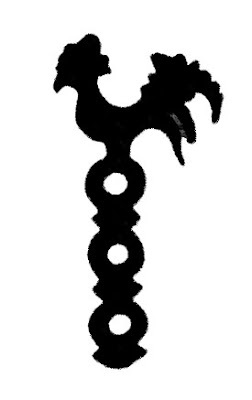
Ring Currency with animal figure will also be referred as Animal Ring Money. The rationale for this is that although there are Ring Currency items with animal figure in their designs, there are also types that come without animal figure. If these items are to be categorized as Animal Currency then this will result in the omission of those without animal figure from the definition. This will lead to a weak and confusing definition to the term Ring Currency as to whether it should include or omit types with animal figure since Animal Ring Currency can be categorized under both Animal Currency as well as Ring Currency.
The term Animal Currency or Animal Money in this blog refers to Animal Money and Animal Currency in general without limiting it to items deemed to originate from the Malay states of Perak and Selangor as listed in the 2nd. Edition of The Encyclopaedia of the Coins of Malaysia, Singapore and Brunei 1400-1986 in page 200 - 205. The listing may indirectly implies that Animal Currency and Animal Money was issued only by Perak and Selangor, that is, assuming that the listing is accurate. It is important that this limiting perception is removed because there are strong evidences to suggest that this currency was also issued and used by other states on the Malay Peninsula.

The Encyclopaedia of the Coins of Malaysia, Singapore and Brunei 1400-1986 by Saran Singh.
The book was first published in 1986 and was re-printed in 1996. This book is now a collector's item due to limited number of print.
The book was first published in 1986 and was re-printed in 1996. This book is now a collector's item due to limited number of print.
In the 2nd. Edition (1996) of the encyclopaedia page 260, the author referred the cockerel perched on rings as Animal Money. For the purpose of this blog (and my forthcoming book entitled The Forgotten Tin Ring Currency of The Malay Peninsula), all items with rings, with or without animal figure will be referred as Ring Currency. This shall include tin cockerel perched on rings presented in the encyclopaedia as item SS20a, SS20b and SS20c in page 260.

Block Image of item SS20a

Block Image of item SS20b

Block Image of item SS20c

Block Image of item SS20b

Block Image of item SS20c
Ring Currency with animal figure will also be referred as Animal Ring Money. The rationale for this is that although there are Ring Currency items with animal figure in their designs, there are also types that come without animal figure. If these items are to be categorized as Animal Currency then this will result in the omission of those without animal figure from the definition. This will lead to a weak and confusing definition to the term Ring Currency as to whether it should include or omit types with animal figure since Animal Ring Currency can be categorized under both Animal Currency as well as Ring Currency.
The term Animal Currency or Animal Money in this blog refers to Animal Money and Animal Currency in general without limiting it to items deemed to originate from the Malay states of Perak and Selangor as listed in the 2nd. Edition of The Encyclopaedia of the Coins of Malaysia, Singapore and Brunei 1400-1986 in page 200 - 205. The listing may indirectly implies that Animal Currency and Animal Money was issued only by Perak and Selangor, that is, assuming that the listing is accurate. It is important that this limiting perception is removed because there are strong evidences to suggest that this currency was also issued and used by other states on the Malay Peninsula.
Subscribe to:
Posts (Atom)