During my routine search for animal currency on the net I discovered Ipohworld. Ipohworld is an education-based, not-for-profit organization established in 2004 to promote awareness and appreciation of Perak, the Silver State of Malaysia and its unique, diverse and rich heritage, with particular focus on Ipoh and the Kinta Valley. Ipohworld is a fine example of non-government effort to promote appreciation of the local heritage.
Also covered in this website is the subject of Animal Money. There are several types of animals presented here, all being attributed to the state of Perak.
Fish
The 4 items presented here is a good spread of variety in terms of sizes and shapes. It is possible that Animal Currency in the shapes of fish is a more common denomination based on their sizes that is relatively smaller compared to bigger sized items in the shapes of other animals.
Clam
Based on my observation, Animal Currency in the form of shell-creatures are less common. A tin shell as big as a fist is known to exist.
Rooster
The rooster presented here is a beautiful piece. Genuine without a doubt as far as I'm concern.
Starfish
This starfish is a bit strange to me. I have a similar item in my collection. The mould of the starfish is an excellent piece to have in a collection.
Bird
I find bird items very interesting. What make them more interesting is the types that come with ring(s).
Goat
My apologies but I find it hard to see this item as being a goat. It looks like a bird to me. Nevertheless, it is a very beautiful piece that I believe was discovered in and acquired from a neighboring country.
Tortoise
This piece is a superb piece. Hollow tortoises are very very rare. There are only a few that are known to exist. I know for certain that this piece was acquired from a neighboring country.
Crocodile
This hollow crocodile is excellent. It is a piece that I would love to have in my collection to say the least.
I am not saying that this piece is not genuine but I do know that some of the "alleged forged items from the 1980s" are quite similar to this one. Based on my research, it is my conclusion that the alleged forged items were created based on real and genuine items found in Malacca in the 1980s.
Other forms of ingot currency presented;
Cap & Cone
Tampang
I'm happy to know that the above collection exist.

Showing posts with label Perak. Show all posts
Showing posts with label Perak. Show all posts
Sunday, June 27, 2010


Monday, June 14, 2010
SAGA PERTUBUHAN NUMISMATIK MALAYSIA - 21ST. ANNIVERSARY 1968 - 1989
This 1990 publication by the Malaysia Numismatic Society besides the article by Mohd. Kassim Hj. Ali on Hoard of Malay States Coins Found At Tanjung Pinang, Riau Islands, Indonesia includes 2 more articles on tin currencies of the Malay Peninsula. First, Tin Coinage of Sultan Ali Iskandar Shah of Johor (1855 - 1877) by Ishar Abdul Latiff and Unlisted Tin and Gold Coins of the Malay States of Johor, Terengganu, Kelantan, Kedah and Perak by Saran Singh.
Published more than 20 years ago in limited print, it is very difficult to get a copy of this publication. The best bet would be from members of the society who were members then.
Published more than 20 years ago in limited print, it is very difficult to get a copy of this publication. The best bet would be from members of the society who were members then.
Saturday, June 12, 2010
DISCOVERY - HOARD OF MALAY STATES COINS FOUND AT TANJUNG PINANG, RIAU ISLAND, INDONESIA (PART 2)
Here are the images presented by Kassim in his article. The condition of the images are not so good due to poor source condition. These items do not come with details such as size and weight.
 Image 1
 Image 2
 Image 3
Image 1 - 3 - Main trunks from the Terengganu coin tree.
 A coin tree cast in the shape of a sun ray using the "lost wax" method.
 Image 1
 Image 2
 Image 3
 Four items of Ring Currency described as - Kedah one cent 'cockerel' animal currency.
 An elephant described as - Perak/Selangor 'elephant' animal currency.
It looks like there is a stringing hole at the back of the elephant, such a feature on elephants is extremely rare. Except for the above item, I do not know of any other elephant with a stringing hole.

Chinese cash tin coin with branch.
 A strange looking item described as - Currency in the form of a goat.
(Poor image due to poor source condition)
 Image 1
 Image 2
 Image 3
Image 1 - 3 - Main trunks from the Terengganu coin tree.
 A coin tree cast in the shape of a sun ray using the "lost wax" method.
 Image 1
 Image 2
 Image 3
Image 1 - 3, described as - Perak/Selangor "cockerel" animal Currency.

A 17th. century Kedah cockerel coin with two rings.

A 17th. century Kedah cockerel coin with two rings.
 Four items of Ring Currency described as - Kedah one cent 'cockerel' animal currency.
Note that the items were described as "animal currency" despite the fact that they do not have any any animal feature in their designs.
 An elephant described as - Perak/Selangor 'elephant' animal currency.
It looks like there is a stringing hole at the back of the elephant, such a feature on elephants is extremely rare. Except for the above item, I do not know of any other elephant with a stringing hole.

Chinese cash tin coin with branch.
 A strange looking item described as - Currency in the form of a goat.
(Poor image due to poor source condition)
DISCOVERY - HOARD OF MALAY STATES COINS FOUND AT TANJUNG PINANG, RIAU ISLAND, INDONESIA (PART 1)
Old coins and relics are known to have been found over the years in the Malay Peninsula (Malaysia) and Malay Archipelago (in this case Indonesia and southern Thailand) but not many involve discovery of a large quantity of items and not many are reported or made known to general public. Perhaps one of the most known discovery was the one at Tanjung Pinang around middle of 1980's.
Mohd. Kassim in his article in Saga Pertubuhan Numismatik Malaysia, 21 Anniversary 1968 - 1989, published in 1990 by Malaysia Numismatik Society shared his experience in having a first look at the items from the famous discovery that he described as a "numismatist's dream come true".
The findings according to Kassim fills a significant gap in the numismatic history of the Malay Peninsula. A new light was shed on how earlier coins were cast by the "lost wax" method, how coins were produced and how the technology developed.
The items found include:

According to Kassim many of the items found ready market in Singapore. Perhaps certain items were acquired by Muzium Negara, Kuala Lumpur Malaysia such as the above item in block image but most items are "lost" or tucked away in private collections. Approximately 25 years after their discoveries the fate of these fascinating items are not known.
Images of some of the items found at Tanjung Pinang, Riau, Indonesia will be included in a future post soon.
Mohd. Kassim in his article in Saga Pertubuhan Numismatik Malaysia, 21 Anniversary 1968 - 1989, published in 1990 by Malaysia Numismatik Society shared his experience in having a first look at the items from the famous discovery that he described as a "numismatist's dream come true".
The findings according to Kassim fills a significant gap in the numismatic history of the Malay Peninsula. A new light was shed on how earlier coins were cast by the "lost wax" method, how coins were produced and how the technology developed.
The items found include:
- cockerel perched on ring (that Kassim attributed to 17th. century Kedah)
- varieties of animal currencies - roosters, fish, goats (sheep) and tortoises (that Kassim mentioned was used in Selangor and Perak)
- tampangs
- tin coins used in Palembang, Djambi and Kedah
- moulds of making "VOC" copper currency

According to Kassim many of the items found ready market in Singapore. Perhaps certain items were acquired by Muzium Negara, Kuala Lumpur Malaysia such as the above item in block image but most items are "lost" or tucked away in private collections. Approximately 25 years after their discoveries the fate of these fascinating items are not known.
Images of some of the items found at Tanjung Pinang, Riau, Indonesia will be included in a future post soon.
Saturday, May 22, 2010
INTRODUCTION
When researching the numismatic history of Malaysia, one cannot do away with referring to the Encyclopaedia of the Coins of Malaysia, Singapore and Brunei 1400-1986 by Saran Singh (1986). It is the key reference for numismatists when it comes to coins and currencies of these countries.

In the 2nd. Edition (1996) of the encyclopaedia page 260, the author referred the cockerel perched on rings as Animal Money. For the purpose of this blog (and my forthcoming book entitled The Forgotten Tin Ring Currency of The Malay Peninsula), all items with rings, with or without animal figure will be referred as Ring Currency. This shall include tin cockerel perched on rings presented in the encyclopaedia as item SS20a, SS20b and SS20c in page 260.
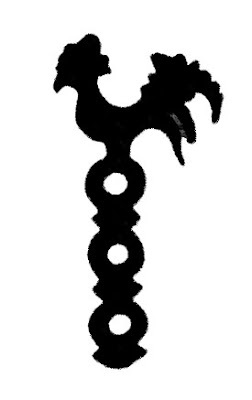
Ring Currency with animal figure will also be referred as Animal Ring Money. The rationale for this is that although there are Ring Currency items with animal figure in their designs, there are also types that come without animal figure. If these items are to be categorized as Animal Currency then this will result in the omission of those without animal figure from the definition. This will lead to a weak and confusing definition to the term Ring Currency as to whether it should include or omit types with animal figure since Animal Ring Currency can be categorized under both Animal Currency as well as Ring Currency.
The term Animal Currency or Animal Money in this blog refers to Animal Money and Animal Currency in general without limiting it to items deemed to originate from the Malay states of Perak and Selangor as listed in the 2nd. Edition of The Encyclopaedia of the Coins of Malaysia, Singapore and Brunei 1400-1986 in page 200 - 205. The listing may indirectly implies that Animal Currency and Animal Money was issued only by Perak and Selangor, that is, assuming that the listing is accurate. It is important that this limiting perception is removed because there are strong evidences to suggest that this currency was also issued and used by other states on the Malay Peninsula.

The Encyclopaedia of the Coins of Malaysia, Singapore and Brunei 1400-1986 by Saran Singh.
The book was first published in 1986 and was re-printed in 1996. This book is now a collector's item due to limited number of print.
The book was first published in 1986 and was re-printed in 1996. This book is now a collector's item due to limited number of print.
In the 2nd. Edition (1996) of the encyclopaedia page 260, the author referred the cockerel perched on rings as Animal Money. For the purpose of this blog (and my forthcoming book entitled The Forgotten Tin Ring Currency of The Malay Peninsula), all items with rings, with or without animal figure will be referred as Ring Currency. This shall include tin cockerel perched on rings presented in the encyclopaedia as item SS20a, SS20b and SS20c in page 260.

Block Image of item SS20a

Block Image of item SS20b

Block Image of item SS20c

Block Image of item SS20b

Block Image of item SS20c
Ring Currency with animal figure will also be referred as Animal Ring Money. The rationale for this is that although there are Ring Currency items with animal figure in their designs, there are also types that come without animal figure. If these items are to be categorized as Animal Currency then this will result in the omission of those without animal figure from the definition. This will lead to a weak and confusing definition to the term Ring Currency as to whether it should include or omit types with animal figure since Animal Ring Currency can be categorized under both Animal Currency as well as Ring Currency.
The term Animal Currency or Animal Money in this blog refers to Animal Money and Animal Currency in general without limiting it to items deemed to originate from the Malay states of Perak and Selangor as listed in the 2nd. Edition of The Encyclopaedia of the Coins of Malaysia, Singapore and Brunei 1400-1986 in page 200 - 205. The listing may indirectly implies that Animal Currency and Animal Money was issued only by Perak and Selangor, that is, assuming that the listing is accurate. It is important that this limiting perception is removed because there are strong evidences to suggest that this currency was also issued and used by other states on the Malay Peninsula.
Subscribe to:
Posts (Atom)